Veteran Army T-shirt Honoring All Who
First Impressions: A Proud, Universal Tribute
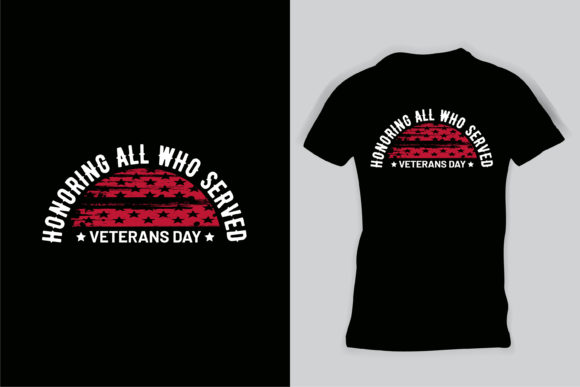
The Veteran Army T-shirt Honoring All Who design immediately strikes a chord. It's not just a military-themed graphic—it’s a broad, inclusive salute to service, which makes it ideal for a wide audience. The layout feels balanced and symmetrical, with a central emblem that reads like a badge of honor. It's the kind of design that works well for both personal and commercial use, especially when you're aiming to create a meaningful connection with the wearer or recipient.
From a design standpoint, the vector format is a big plus. It allows for resizing without loss of quality, which is crucial when adapting the design to different garment sizes or embroidery applications. The visual personality is dignified but not overly formal—perfect for honoring veterans while still being wearable for everyday use.
Real-World Use: From Sweatshirts to Baby Onesies
I recently tested this design on a custom embroidered sweatshirt for a local veteran support group. The design scaled well to a larger chest placement, and the stitch clarity held up even on a textured fleece fabric. I used a medium-weight stabilizer and adjusted the stitch density slightly to accommodate the thicker material. The result was clean, professional, and emotionally resonant.
What surprised me most was how well it translated to a baby onesie. The design’s central emblem and minimal text made it adaptable to smaller formats. I resized it to fit a 4x4 hoop and used a lightweight stabilizer. The embroidered patch came out crisp, and the parents loved the subtle but clear message of gratitude.
It also works beautifully on tote bags and kitchen towels—items that are often used for gifting or boutique-style merchandise. The design’s versatility makes it a strong contender for small shop owners looking to expand their patriotic or military-themed product lines.
Where to Use It Carefully
While the Veteran Army T-shirt Honoring All Who design is versatile, there are some scenarios where extra attention is needed. On stretchy fabrics like cotton jersey or lightweight knits, I recommend using a high-quality cutaway stabilizer to prevent puckering. The same goes for curved surfaces like baseball caps—hoop placement and tension matter more than usual.
The lettering, while not overly small, can start to lose definition on very tiny applications. If you're planning to use this for a personalized baby cap or a patch smaller than 2.5 inches, be sure to test the design on scrap fabric first. You may need to adjust the font size or simplify some of the decorative elements.
Dark fabrics also require a bit of forethought. I tested the design on black cotton and found that adding a white underlay or using light-colored threads for the outer elements made the embroidery pop. Without that contrast, some of the finer details can get lost.
Design Impact: Emotional and Commercial Value
This design has a strong emotional pull, which is a big advantage in the handmade and personalized gift market. Whether it's stitched onto a holiday gift for a grandparent or a thank-you item for a nurse, the design adds a layer of meaning that customers respond to positively.
From a business perspective, it’s a smart asset for Etsy sellers and craft entrepreneurs. The universal theme means it can be marketed to a wide demographic—military families, healthcare workers, educators, and more. It also works well in digital product bundles or as part of a themed collection for seasonal sales.
When used consistently across a product line, the design contributes to brand recognition. I've seen shops build entire patriotic collections around similar graphics, and this one fits right in. It's professional enough for boutique branding and heartfelt enough for personal gifts.
Practical Notes for Embroidery Designers
Here are a few key tips I picked up while working with the Veteran Army T-shirt Honoring All Who:
- Test on scrap fabric before committing to a final piece, especially if you're using a new fabric type or hoop size.
- Check thread color contrast carefully—especially on dark or textured materials. You may need to adjust thread choices for clarity.
- Review stitch density settings. Some areas may benefit from slight adjustments to prevent fabric distortion or thread breakage.
- Confirm hoop size compatibility before stitching. If you're working with a smaller hoop, consider simplifying or resizing parts of the design.
- Inspect small details like lettering or fine lines under magnification to ensure they’ll stitch cleanly.
- Test in black and white mockups to see how the design holds up without color. This helps assess clarity and readability.
- Compare light and dark fabric backgrounds side by side. You may want to offer variations or suggest thread changes in your product listing.
- Use proper stabilizer based on fabric type—cutaway for stretchy materials, tear-away for stable cottons, and heat-away for tricky placements.
- Verify licensing terms before using the design in commercial products. Make sure you’re cleared for resale, especially if you're offering embroidered items or digital embroidery files.
Final Thoughts: A Worthy Addition to Any Design Kit
Overall, the Veteran Army T-shirt Honoring All Who design is a solid choice for embroidery designers and small business owners looking to add meaningful, versatile graphics to their product lineup. It’s adaptable, emotionally resonant, and well-suited for a variety of fabric types and project styles.
Whether you're creating a custom embroidered sweatshirt for a veteran, a personalized baby gift for a military family, or a boutique tote for a Memorial Day market, this design delivers both visual appeal and emotional impact. Just be mindful of fabric type, hoop size, and thread contrast, and you’ll be rewarded with a polished, professional finish every time.